> SETTLEMENT INFRASTRUCTURE DATABASE

SYSTEM STATUS: OPERATIONAL | FACILITIES: 37

FACILITIES: 37
SECURED: 100%

Settlement Overview

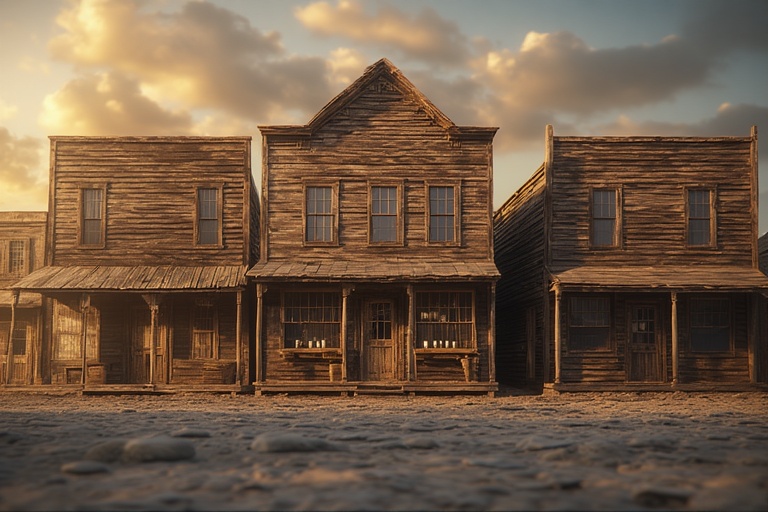
Founded in 1879 as a silver mining town in the Nevada high desert, Obsidian Hill thrived until the 1930s when the silver ran out. The ghost town sat abandoned for decades until 1987, when entrepreneurs transformed it into an authentic Old West educational theme park, carefully restoring original structures and adding period-appropriate buildings for demonstrations and visitor experiences.

Over its 30+ year operation, the park evolved with the times — adding artisanal markets, craft breweries, and farm-to-table dining while maintaining its educational mission. Now, these layers of authentic frontier architecture, museum-quality demonstration facilities, and discretely integrated modern infrastructure provide the perfect foundation for up to 123 survivors rebuilding civilization in the desert.

47
Total Buildings
4
Defense Points
53
Housing Units
6
Working Vehicles
12
Water Sources
3
Power Systems

Housing & Accommodation

The Territorial Hotel

Primary Housing — 24 Rooms
AVAILABLE
The Territorial Hotel
Built in 1987 as the park's premier accommodation, this three-story Victorian hotel featured 24 themed rooms — each decorated to represent a different character from Obsidian Hill' history. The "Silver Baron Suite" had imported European furniture, while the "Prospector's Room" featured authentic mining equipment as decor.

Renovated in 2017 as a boutique hotel adding spa services and wine bar in the lobby, desperately trying to attract Vegas weekend tourists. The renovation cost $2.3 million and included heated bathroom floors, rainfall showers, and a rooftop deck that was used exactly twice for yoga classes before everyone gave up.

Ready to house 45 long-term residents with families designated for the larger suites. The wine bar will stock medical supplies, the spa will serve as a communal bathroom. The heated floors won't work without power, but the thick walls keep rooms surprisingly temperate. The rooftop deck serves as a perfect lookout post. What was built for luxury accidentally works for survival — proper ventilation, multiple exits, storage space in every room, and those thick walls that will muffle whatever comes next.

The Dusty Rose Hotel

Original 1881 — 12 Rooms
QUARANTINE READY
The Dusty Rose Hotel
The original 1881 hotel above the saloon, with 12 rooms that housed miners, gamblers, and traveling salesmen. Each room has original brass bed frames and washstands. Room #7 still has a bullet hole in the wall from an 1885 dispute. During park operations, these were functional hotel rooms at $180/night for the "authentic frontier experience." Designated for new arrivals' mandatory quarantine before housing assignment. The isolation that once offered "authentic frontier solitude" will serve a different purpose.

Historical Living Quarters

11 Former Museum Displays
AVAILABLE
Historical Living Quarters
Throughout the park, original 1880s living quarters were meticulously preserved as museum displays. Mannequins in period dress, velvet ropes, interpretive plaques explaining "Life on the Frontier." After 30+ years behind "Please Do Not Touch" signs, these spaces are ready to be lived in again. The mannequins are gone, the velvet ropes repurposed, and these authentic frontier homes await new residents.

Original Miners' Cabins

6 Restored Dwellings
AVAILABLE
Original Miners' Cabins
Six original 1880s miners' cabins in various states of restoration. Three were fully restored in 1987 with period furnishings for tours. Two were partially restored in 2003 for "rustic overnight experiences" at $250/night. One remained deliberately unrestored as the "authentic ruins experience."

All six are now ready to house survivors who will form their own small neighborhood with space for a community garden between the cabins. What was built for luxury accidentally works for survival.

Food & Supplies

Grassroots Community Kitchen

Central Dining — Feeds 180 Daily
OPERATIONAL
Grassroots Community Kitchen
Built in 1987 as "Cookie's Chuckwagon Grub House" — complete with mechanical bull and all-you-can-eat beans for $9.95. The barn-style structure hid modern commercial kitchen equipment behind swinging saloon doors. By 2010, the mechanical bull was gone and attempts at "elevated Western cuisine" weren't working. The kitchen went through three celebrity chefs, each one trying to make "authentic frontier fusion" happen. It didn't happen.

Rebranded in 2014 as "Grassroots Community Kitchen" with exposed beams, mason jar lighting, and a $28 "heritage grain bowl." The renovation included a wood-fired pizza oven imported from Italy, a craft cocktail bar featuring "locally foraged bitters," and a chef's table that cost more than most people's cars. The Instagram account had 12,000 followers. The restaurant had maybe 12 regular customers.

The wood-fired ovens installed for artisanal pizzas will bake survival bread — turns out that Italian oven is incredibly fuel-efficient. The craft beer taps are drained, but the keg storage maintains perfect temperature. Everyone will eat here three times daily — no heritage grain bowls, no choices, but everyone will eat. The exposed beams that were purely aesthetic will hold drying herbs and preserved meats. The mason jar lights are ready to become actual mason jars for storage. That $28 heritage grain bowl seems like a fever dream from another civilization. The mechanical bull was found in storage last month — its motor will power the grain mill.

Crenshaw's General Store

Supply Distribution Center
READY
Crenshaw's General Store
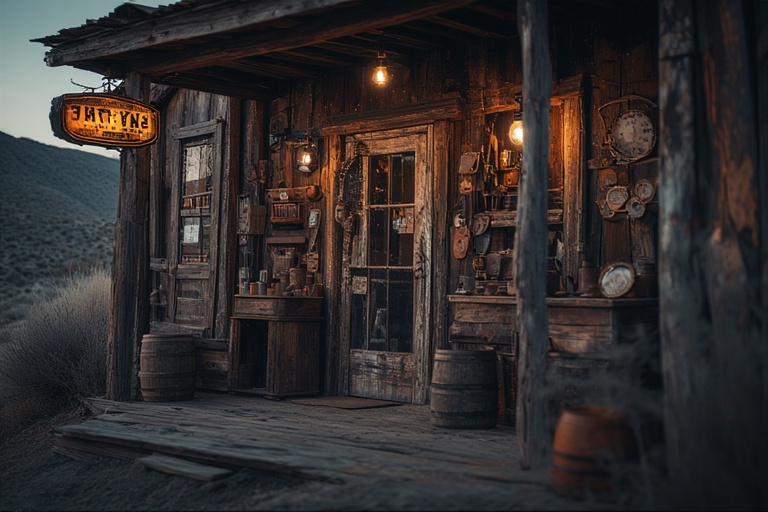
Original 1882 general store with 48-cubby postal sorting desk, hand-pump well that still works, and a root cellar that maintains 55°F year-round. The massive iron safe behind the counter held payroll for 200 miners. The upstairs merchant quarters showcase an 1880s Victorian Christmas scene that hasn't changed since 1987.

In 2019, became "Provisions & Dry Goods" artisanal market selling $18 bags of "frontier trail mix" and $45 hand-poured candles. Ready to return to actual necessity — distributing rations, managing inventory on the same ledgers the park sold as souvenirs. The root cellar perfect for medicine storage. The iron safe awaits ammunition. The Christmas scene is still up.

The Stables
Livestock & Transportation Hub
OPERATIONAL
The Stables
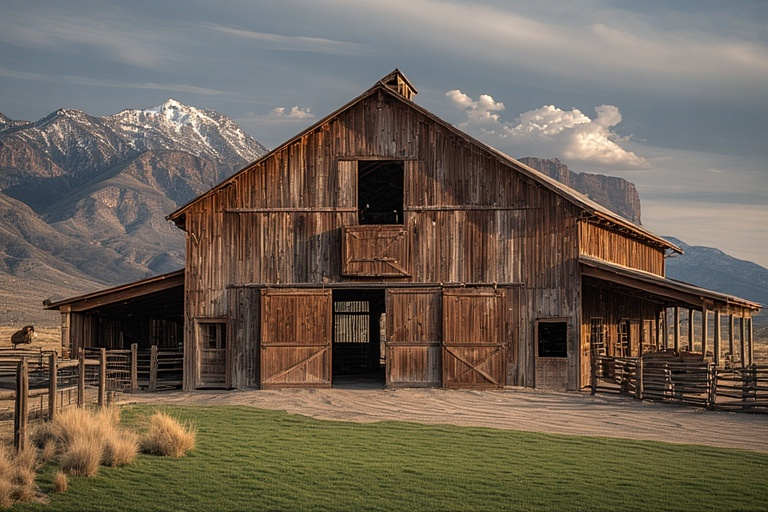
Built 1879, expanded 1882, renovated 1987. Twenty stalls plus the demonstration barn added in 2005. Currently houses eight trail horses from the tourist rides, two draft horses for the stagecoach, three mules for "authentic pack train demonstrations," and the petting zoo collection - four goats, six sheep, a dozen chickens, two milk cows named Buttercup and Daisy who gave demonstrations twice daily at 10 AM and 2 PM.

Tack room fully equipped with western and English saddles, harnesses for the stagecoach, pack equipment for the mules. Feed room stocked with this season's hay (300 bales delivered monthly), grain, supplements, and the specialized feed for the different animals. The demonstration area has milking stanchions, sheep shearing platform, and the chicken coop with educational signs about "Frontier Egg Production."

The horses know the tourist trails by heart - they could walk them blindfolded. The draft horses, Ben and Jerry, still expect their 4 PM grain ration. The petting zoo animals are embarrassingly tame - the goats will eat anything, the sheep follow anyone with a bucket, and the chickens are still laying. Buttercup and Daisy still need milking twice daily. The smithy area connects directly to the blacksmith shop for horseshoeing. Water troughs gravity-fed from elevated tank. Suddenly these tourist attractions are genuine survival assets - transportation, milk, eggs, wool, and eventually meat if necessary.

Heritage Gardens

Primary Food Production
OPERATIONAL
Heritage Gardens
Created in 2008 to demonstrate "what pioneers ate" with heirloom varieties and desert-adapted crops. Interpretive signs explained Three Sisters planting. A medicinal herb spiral showed "Dr. Hammond's Frontier Remedies." School groups would grind corn with authentic stones for exactly three minutes before getting bored.

Expanded in 2014 to supply the restaurant's farm-to-table menu. The heirloom seeds collected for historical accuracy — Cherokee Purple tomatoes, Glass Gem corn — prove invaluable. These varieties grow without modern fertilizers. The medicinal garden isn't quaint anymore. The interpretive signs ready to become plant stakes.

Settlement Apiaries

Honey Production & Crop Pollination
THRIVING
Settlement Apiaries
Twelve Langstroth hives salvaged from Desert Bloom Farm and nearby homesteads. Positioned for optimal foraging range near the gardens. Desert wildflowers, sage, and rabbitbrush provide nectar through the growing season.

Each healthy hive produces 30-60 pounds of honey annually in this climate. More importantly, the bees triple vegetable yields through pollination in the outdoor gardens. Colony health monitored weekly. Varroa mites controlled with powdered sugar dusting and drone comb removal. Winter feeding required when natural nectar stops. Split strongest colonies each spring to replace losses.

Desert Bloom Greenhouses

Year-Round Food Production — 8,100 sq ft
OPERATIONAL
Desert Bloom Greenhouses
Three 30x90 foot polycarb greenhouses salvaged from Desert Bloom Farm on Day 12. Each greenhouse maintains 65-75°F through passive solar in winter, requires venting in summer. The hydroponic NFT channels grow lettuce and herbs on 28-day cycles. Soil beds produce tomatoes, peppers, cucumbers - everything the 79-day outdoor season kills. Automated systems work with power. Without power, it's buckets and manual watering.

Year-round production feeds 60-80 people. The controlled environment provides fresh vegetables through winter when nothing grows outside. Combined with Heritage Gardens, these greenhouses make the settlement's food production viable.

Silver Creek Mine

Natural Refrigeration
ACCESSIBLE
Silver Creek Mine
The original 1879 silver mine with shafts descending 150 feet. The restored cage elevator creaks but functions. Mining equipment from the 1880s through 1930s shows the evolution of extraction technology. The temperature stays at exactly 55°F at the first level, dropping to 48°F deeper down. Tour groups only saw the first 50 feet.

LED lights installed in 2005 for "enhanced safety" still work on battery backup. The constant temperature perfect for preserving food and medicine without power. Deeper tunnels, never part of tours, ready for emergency supplies and last-resort shelter. The "DANGER - DO NOT ENTER" signs from the park are still accurate.

Obsidian Brewing Company

Alcohol/Medicine Production
LIMITED
Obsidian Brewing Company
Opened 2016 in a renovated 1890s warehouse, part of the park's desperate pivot to attract millennials. Copper brewing kettles visible through Edison bulb-lit windows. Six signature beers with names like "Prospector's IPA" and "Silver Rush Stout." The tasting room had reclaimed wood everything and a $14 pretzel.

The copper kettles still work, barely. Limited production possible using salvaged grains and desert plants - prickly pear wine, mesquite beer. Alcohol will serve as medicine, antiseptic, and morale booster. The fermentation knowledge proves more valuable than the equipment. The $14 pretzel seems absurd now.

Security & Defense

Sheriff's Office & Jail

Law Enforcement HQ
READY
Sheriff's Office & Jail
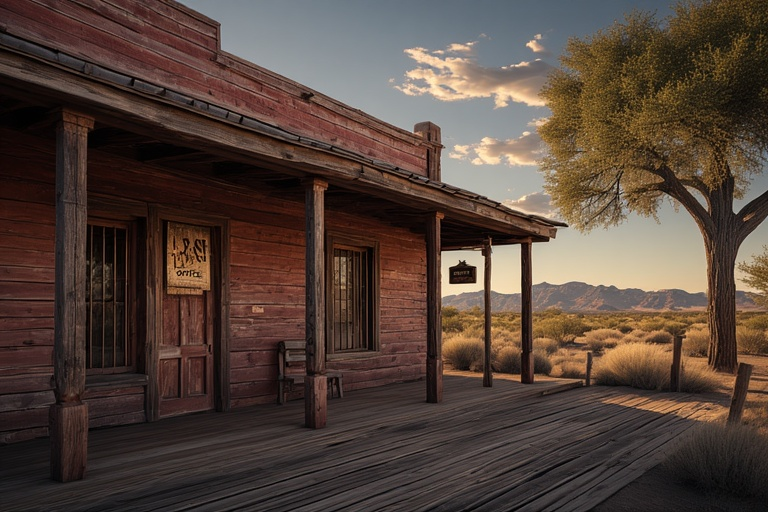
Built 1880 with heavy timber and iron-reinforced doors that have never needed replacement. Four cells with original iron bars hand-forged by the town's first blacksmith. The sheriff's quarters behind the office displayed a mannequin family eating endless beans. A reproduction wanted poster for "Black Bart" hung in every cell.

The cells work exactly as intended 140 years later - ready for holding prisoners, quarantining the sick, securing the dangerous. The sheriff's quarters, after decades showing "Frontier Law Enforcement Life," await the actual security chief. The mannequin family is gone but the bean pot remains. Black Bart posters ready for kindling.

Forest Service Fire Tower

Primary Watchtower
OPERATIONAL
Forest Service Fire Tower
Built 1962 by the U.S. Forest Service, 25 years before the theme park existed. 60-foot steel tower with enclosed cab, telephone line to Reno, and a log book dating to Kennedy's presidency. Decommissioned in 1994 when satellites replaced human spotters. The park kept it as a "viewpoint" and cell tower disguise.

Solar panels added 2011 for "green initiative" now power essential radio equipment. The height provides 15-mile visibility across open desert. Original fire-spotting maps help identify landmarks. The 1962 log book continues with new entries - ready for less about fire, more about approaching threats. Ready for 24/7 manning in shifts.

First National Bank Vault

Maximum Security Storage
SECURE
First National Bank Vault
1883 Diebold vault - 6-inch steel walls, 3-ton door, combination lock that takes four people to open (by design). Shipped by rail from Cincinnati, installed by a team of eight specialists. Survived one robbery attempt in 1889 (unsuccessful), one fire in 1923 (contents intact), and decades of abandonment (mouse nest in corner).

Wells Fargo sponsored a museum in 2008, adding interactive displays about frontier banking. Ready to store what can't be replaced: antibiotics, insulin, seed bank, ammunition. The four-person lock system prevents any single person from accessing critical supplies. The mouse nest was removed but mice will return. Some things never change.

Perimeter Fortifications

Primary Defense Line
FORTIFIED
Perimeter Fortifications
Original 1987 split-rail fencing for "authentic atmosphere," chain-link added in 1993 after insurance company visit. Motion sensors installed 2009 after someone stole the mechanical bull. Security cameras added 2015. The main gate - two massive wooden doors with "OBSIDIAN HILL EST. 1879" - purely decorative until now.

Ready for reinforcement with everything available - shipping containers, overturned vehicles, sheet metal from the gift shop roof. The decorative wooden gates ready for barricading with a school bus. 12-foot walls will incorporate 30 years of park infrastructure. Motion sensors still work sporadically. The stolen mechanical bull was never found.

Essential Services

Doc Holliday's Medicine Show

Primary Medical Facility
LOW SUPPLIES
Doc Holliday's Medicine Show
Built 1987 for frontier medicine demonstrations. Featured real 1880s surgical tools (behind glass), reproduction medicine bottles filled with colored water, and a twice-daily "snake oil salesman" show. The examination table was authentic, the skeleton was plastic, the leeches were rubber. Educational plaques explained "bloodletting" and "trepanning."

The authentic surgical tools ready to come out from behind glass, sterilized and sharp. The colored water ready to be replaced with actual medicines, what little can be found. The examination table ready for real patients. The skeleton is still plastic but useful for teaching. Considering actual leeches for wound cleaning. Trepanning remains off the table.

Little Red Schoolhouse

Education Center
READY
Little Red Schoolhouse
Built 1987, painted red because "all frontier schools were red" (historically inaccurate but photogenic). Pot-belly stove that was never connected. McGuffey Readers from 1879. Slate boards and chalk because "authentic." Dunce cap in corner for photos. School groups endured 45-minute lessons in "frontier education" before lunch.

Ready to actually educate children with those same McGuffey Readers - they're the only textbooks. The pot-belly stove ready for connection and burning. Chalk and slate aren't quaint anymore, they're sustainable. The dunce cap can be repurposed as a funnel. Real frontier education awaits: reading, writing, arithmetic, survival.

Maintenance Complex

Technical Center
EQUIPPED
Maintenance Complex
Built 1987 behind false storefronts labeled "Sampson's Feed Store" and "Territorial Mining Supply." Expanded three times to hide more modern equipment. Contains 30 years of spare parts for everything - the mechanical bull motor, carousel horses, spare mannequin limbs, 47 boxes of "authentic" horseshoes never used.

The false fronts fooled no one then, will protect everything now. Those 30 years of hoarded parts - every saved screw, spare wire, extra fitting - invaluable. The mechanical bull motor ready for repurposing as water pump. Mannequin limbs ready for burning if needed. The 47 boxes of horseshoes? Actually useful. Pack rats accidentally prepared perfectly.

The Bath House

Communal Hygiene Facility
OPERATIONAL
The Bath House
The bath house was built in 1988 to showcase Victorian-era bathing customs. The building features six copper tubs salvaged from an 1890s Denver hotel, with separate men's and women's sides divided by a central boiler room. Wood-fired boilers heated water for tourists who paid $25 for the full experience - soaking with bath salts, oils, and thick towels provided.

The facility now provides essential hygiene services for the settlement. Most buildings lack functioning plumbing, making this one of the few places to properly bathe. The copper tubs remain watertight, and the wood-fired boilers still heat water effectively. The settlement operates on a schedule to ensure all residents have access. Soap production from the Chandler's Shop keeps supplies adequate. The separate sides continue to provide privacy. What was once a tourist curiosity has become vital infrastructure.

Production & Workshops

Blacksmith Shop

Metal Working & Tool Production
READY
Blacksmith Shop
Original 1881 blacksmith forge with working bellows, anvil, and coal forge. Demonstrations showed visitors "frontier metalworking" - mostly making horseshoes for photos. The forge fires went out in 1987 and stayed cold until now. Ready to heat metal, forge tools, repair everything that breaks. The horseshoe photo-ops are over - time for real work.

Carpenter's Workshop

Wood Working & Construction
EQUIPPED
Carpenter's Workshop
Built 1987 for woodworking demonstrations. Hand tools from the 1880s alongside modern power tools hidden behind authentic facades. Stacks of lumber "aged" with coffee stains. The workshop built props for shows and maintained park structures. Ready for actual construction - furniture, repairs, fortifications.

Textile Workshop

Clothing & Fabric Production
OPERATIONAL
Textile Workshop
Opened 2012 as "Frontier Fashions" boutique selling $200 "authentic" dresses. Features working spinning wheels, looms, and sewing machines from multiple eras. Staff demonstrated "period-appropriate needlework" while selling overpriced reproduction clothes. The equipment works, the skills were learned. Time to make clothes that last, not costumes.

Chandler's Shop & Apothecary

Essential Goods Workshop
OPERATIONAL
Chandler's Shop
Built 1998 as "Frontier Chandlery," where costumed staff demonstrated 19th-century soap and candle making while selling $30 "handcrafted heritage" candles to tourists. The rendering vats, molds, and drying racks were always functional - just underutilized. Now produces essential soaps and candles alongside medicinal preparations. The upper floor serves as drying room and herbal workshop, while the main floor handles the messier work of rendering and boiling. Lavender goes into both soap and sleep tinctures. Beeswax serves candles and healing salves. What was theater became necessity.

Assayer's Office

Metallurgy & Chemical Laboratory
LIMITED
Assayer's Office
Original 1880 assayer's office where ore samples were tested for silver content. Single-story workspace packed with equipment: Precision balance scales accurate to 0.001 ounces, cupellation furnace capable of 2,000°F, 30+ crucibles of various sizes, bone ash cupels, and a full set of chemistry equipment including retorts, alembics, and distillation apparatus. The chemical cabinet holds real reagents in original bottles - nitric acid, hydrochloric acid, silver nitrate, lead oxide, borax, sodium carbonate.

The furnace is a proper muffle design with fire clay lining, just needs coal and cleaning. Blowpipe analysis kit complete with charcoal blocks, platinum wire, and mineral testing solutions. Rock crushing equipment includes jaw crusher, pulverizer, and full set of screens for particle sizing. Microscope is a 1920s Bausch & Lomb with polarizing filters for mineral identification. Full library of assaying manuals and mineral identification guides from 1880-1930.

Behind the office, a cramped lean-to shack served as the assayer's quarters - just big enough for a cot and washstand, boards showing daylight through the gaps, roof half-collapsed. The assayer clearly spent all the money on equipment, not comfort. Everything needed to test mineral content, refine metals, or produce chemicals is here. Could analyze soil for farming, test water purity, refine silver from ore, extract useful minerals from desert rocks, or produce sulfuric acid, gunpowder components, and other chemicals. Just needs someone who understands chemistry - the equipment is real, functional, and waiting.

The Leatherworks & Saddlery

Leather Production & Training
OPERATIONAL
The Leatherworks & Saddlery
The original 1882 leather and tack shop served miners who needed sturdy boots and reliable horse gear. During park operations from 1987 to 2024, "Frontier Leatherworks" sold custom boots, belts, and cowboy hats to tourists. The shop featured a demonstration area where visitors could watch traditional leatherworking techniques. The craftsman who ran the shop for eighteen years kept detailed notebooks documenting every pattern, technique, and process.

The shop now produces essential leather goods for settlement survival. Workers create boots that protect feet from desert thorns and scorpions, hats that prevent sunstroke, and saddles and bridles for the working horses. The demonstration area serves its real purpose of transferring knowledge to apprentices before these skills are lost. The notebooks have become the primary teaching resource. The tanning vats behind the building were supposedly decommissioned for environmental reasons, but all the equipment remains functional.

Community & Social

Town Hall & Community Center

Meetings & Governance
READY
Town Hall
Built 1881, restored 1987. Original served as seat of frontier government until county seat moved to Reno in 1905. Features original judge's bench, jury box, and territorial records. During park operation, hosted mock trials for tourists. Ready for actual governance - town meetings, dispute resolution, community decisions. The gavel still works.

Chapel of St. Lawrence

Non-Denominational Worship
READY
Chapel
Built 1882, never consecrated - the traveling preacher left town before the roof was finished. Completed during park restoration in 1987. Simple wooden pews, hand-carved altar, stained glass windows made in Nevada. Hosted tourist weddings and memorial services for park employees. Ready for whatever faith the survivors bring.

Gold Nugget Saloon

Community Gathering Space
READY
Gold Nugget Saloon
Original 1881 saloon, heart of the town's social life. Features 40-foot mahogany bar shipped from San Francisco, original brass spittoons, and a player piano that still works. Served actual alcohol until 2019 health department visit. The stage where saloon girls performed will host community announcements. The piano provides the only entertainment. Last call was three months ago.

Pioneer Cemetery

Memorial & Burial Ground
MAINTAINED
Pioneer Cemetery
Original cemetery from 1879-1932, 147 graves of miners, families, and frontier life casualties. Headstones tell stories of mine accidents, winter fever, and frontier hardship. Maintained by park staff as historical site with interpretive plaques. The space remains. The need continues. New graves await - hopefully not too many, not too soon.

The Post Office

Communication & Distribution Hub
OPERATIONAL
The Post Office
Built 1881 as the territorial post office, serving miners who sent wages home and received letters that took six weeks from the East. Original sorting cubbies, brass P.O. boxes numbered 1-200, and the postmaster's cage with brass bars remain intact. The cancellation stamp still reads "Obsidian Hill, Nevada Territory" - Nevada became a state in 1864, but no one told the stamp maker.

During park operations, sold "authentic frontier postcards" for $3.50 each and operated a gift shop featuring $45 fountain pens and leather journals "just like the pioneers used." The safe behind the counter held the day's cash register receipts, not mail robbery prevention. Tourists could send postcards with the official Obsidian Hill cancellation - the postal service approved it as a contract station until 2019.

Ready to serve as the settlement's communication center and distribution hub. The sorting cubbies perfect for resident mail slots and ration distribution tracking. The brass P.O. boxes can store small valuables or critical documents. The postmaster's cage provides a secure distribution point. The stamp might finally be historically accurate again.

The Obsidian Hill Tribune
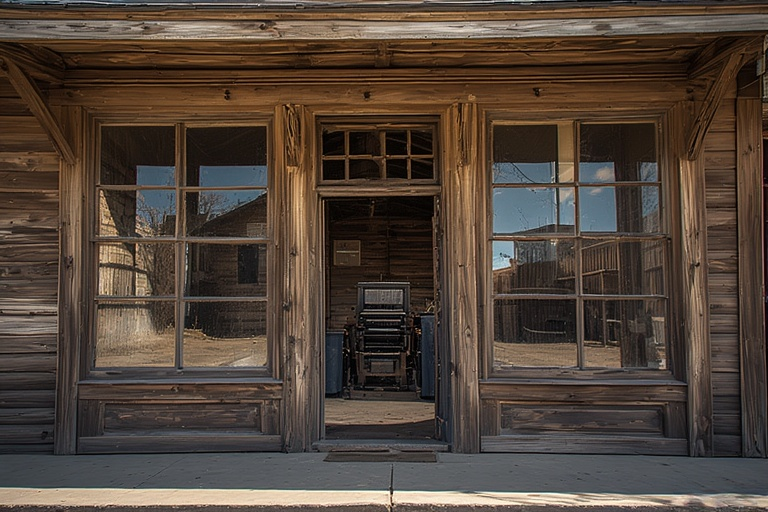
Print Shop & Information Center
OPERATIONAL
The Obsidian Hill Tribune
Built 1881, home of the weekly Tribune which reported mine yields, arrivals, deaths, and occasional scandals. The 1887 Chandler & Price platen press weighs 1,400 pounds and still works - tourists could print souvenir broadsheets for $20. Complete California job cases with wood and lead type, composing stones, ink rollers, and paper cutter. The headline for the final 1932 edition still set in type: "MINE CLOSES - TOWN DIES."

During park operations, printed "Olde West" wedding invitations, wanted posters with tourist photos ($35), and a monthly newsletter nobody read. The back room stored 10,000 sheets of cream paper, 50 gallons of ink, and boxes of tourist "wanted poster" blanks. A mannequin editor with green eyeshade and sleeve garters eternally set type for stories that never ran.

Now produces essential community updates - water schedules, security alerts, work assignments, council decisions, health notices. The press requires no electricity, just muscle. Lead type can be melted and recast for new announcements. Paper supply sufficient for years of bulletins. Weekly community newsletter keeps all 180 residents informed of changes, threats, and achievements. The headline type cleaned and ready: "SETTLEMENT SURVIVES - HOPE CONTINUES."

Hot Springs
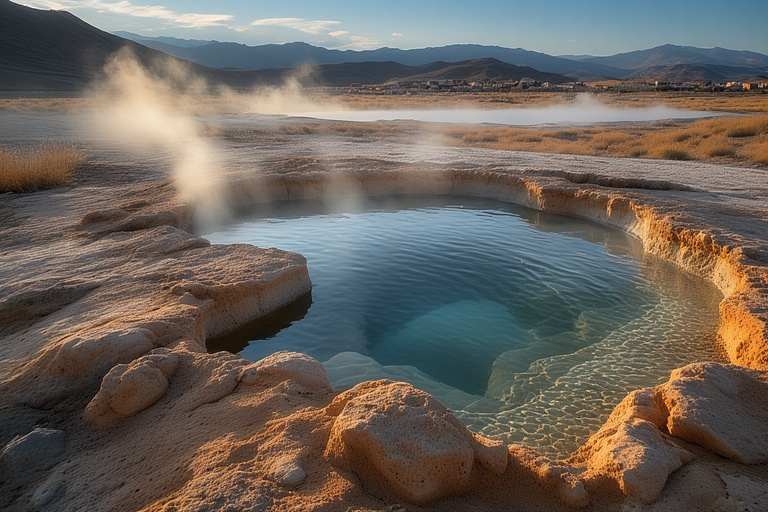
Natural Thermal Springs
AVAILABLE
Hot Springs
Natural hot spring tucked among rock formations on the settlement property. The park never developed it or included it on tourist maps due to liability concerns, but it was a favorite of the staff who worked at Obsidian over the years. Hot enough for a proper soak. Steam rises visibly on cold mornings, marking its location for anyone who knows to look. Popular with members of The Watch after long patrols - the heat works out the aches from days spent scouting or hauling salvage. Worth the walk when you want to actually soak instead of just getting clean.

Utilities & Infrastructure

Solar Array & Power Station

Primary Electrical Grid
LIMITED
Solar Array
Installed 2011 as part of "green tourism initiative." 150kW solar array with battery backup system designed to power LED lighting and emergency systems. Grid-tied to Nevada Power until the grid stopped existing. Batteries hold 48-hour charge for essential systems - communications, medical, water pumps. Enough to keep the lights on, not enough to keep the air conditioning running. The sun still shines, at least.

Water Treatment & Wells

Freshwater Supply System
RATIONED
Water Treatment
Three artesian wells drilled in 1987 tap the same aquifer that sustained the original settlement. Modern treatment facility purified water for park operations and the hotel spa. 50,000-gallon storage tanks provide reserve capacity. Solar pumps added in 2016. The water table remains stable, treatment systems functional, but consumption must be rationed among 180 people. Desert living means desert discipline.

Miscellaneous Buildings

The Barber Shop

Tonsorial Parlor
OPERATIONAL
The Barber Shop
Built in 1987 following historical research. The shop features two straight-backed chairs with headrests, basins for water, and a collection of straight razors. During park operations, the barber gave actual haircuts and shaves while visitors watched from waiting chairs. The walls displayed period advertisements and a price list showing "Shave 3¢, Haircut 10¢" though tourists paid current rates. The barber lived in the room behind the shop where towels were laundered - frontier shops shared one towel among ten customers but the park had higher standards.

The shop continues to provide haircuts and shaves for the settlement. Manual clippers from the 1920s work without electricity. Straight razors are kept sharp on the leather strop. The barber's quarters house whoever has steady hands. The price list still hangs on the wall, meaningless now. Services are part of settlement duties. The news exchanged here matters more than the haircuts.

Old Time Photo Parlor

Photography Studio
LIMITED USE
Old Time Photo Parlor
Built in 1994 as an additional attraction. "Prospector's Portrait Studio" offered tourists the chance to dress in period costumes and take home sepia-toned photographs. Hundreds of costumes hang on racks - saloon girls, cowboys, sheriffs, Victorian ladies. Multiple painted backdrops depict typical frontier scenes: saloon interior, desert sunset, jail cell, general store. The studio includes professional lighting equipment and several vintage cameras including a large format bellows camera from the 1890s. The darkroom has complete developing equipment.

The studio sits mostly unused now. The costumes serve as spare clothing when needed. The cameras work but film is finite - reserved for documentation of critical events. The painted backdrops gather dust. Someone suggested using the space for storage but no one has moved the costumes yet. The chemical smell from the darkroom lingers. Occasionally someone tries on a costume just to remember what playing dress-up felt like.

Agricultural Capacity Analysis

Critical Environmental Constraints

White Pine County - Zone 5A/5B - Elevation 6,200ft
EXTREME CONDITIONS
The Reality: This is not farmland. This is high desert at 6,200 feet where frost has occurred in EVERY month including July. Traditional agriculture without protection is nearly impossible.
Growing Season
79 days
June 18 - Sept 8
Annual Rainfall
9.4"
Extreme drought
Soil pH
7.8-8.3
Highly alkaline
Min Temp
-20°F
Zone 5a/5b
Elevation
6,200ft
Intense UV
Humidity
30%
Desiccating
These conditions mean that without greenhouses, only the hardiest crops survive, and even then only with constant vigilance against frost. Every agricultural plan must account for these brutal realities.

Tier 1: Emergency Survival Agriculture

Obsidian Hill Park Gardens Only
15-25 PEOPLE
Using only the existing Heritage Gardens and available park land, intensive cultivation of 2-3 acres can partially feed 15-25 people. This represents the absolute minimum agricultural capacity using hand tools and salvaged materials.

PRODUCTION POTENTIAL

Potatoes (60-day): 2,000-3,000 lbs
Root vegetables: 1,500 lbs
Leafy greens: 500 lbs fresh
Cold-hardy brassicas: 800 lbs
Storage life varies: potatoes 6+ months, roots 4-6 months, greens days only

CRITICAL LIMITATIONS

Every frost protection method required
15,000+ gallons water/month in summer
Constant monitoring for frost
No warm season crops possible
Provides only 20-30% of calories
Labor intensive for minimal return

Tier 2: Secured Desert Bloom Greenhouses

Park + 3 Greenhouse Complex
60-80 PEOPLE
With the Desert Bloom greenhouse complex secured (3 structures, 30'x90' each), year-round production becomes possible. These 8,100 square feet of protected growing space transform agricultural capacity.

ANNUAL PRODUCTION

3,600 heads lettuce/greens yearly
4,800 lbs tomatoes year-round
10,000-20,000 eggs from chickens
5,000+ lbs outdoor storage crops
50-60% of nutritional needs met

CAPABILITIES UNLOCKED

Year-round fresh vegetables
Warm season crops viable
Protected seed starting
Protected poultry operation
80% water reduction vs. field
⚠ Plastic degrades in 5-7 years

Tier 3: Expanded Agricultural Operations

Additional Infrastructure Built
150-200 PEOPLE
By constructing 4+ additional greenhouses from salvaged materials and expanding field operations to 10-15 acres with irrigation, the settlement can approach food security for a larger population.

ADDITIONS & IMPACT

Each greenhouse: +20 people fed
Rabbit colony: protein for 40
5 acres potatoes: calories for 50
10 dairy goats: dairy for 30
$15,000 materials per greenhouse

CRITICAL REQUIREMENTS

Water rights to Comins Lake
200+ yards soil/compost import
Greenhouse construction skills
20+ full-time farm workers
Hay source for livestock
Without tractors: manual labor only

Tier 4: Regional Agricultural Network

Secured Ranch Partnerships
500+ PEOPLE
The real solution to feeding large populations in Nevada: Capture existing ranches with their cattle herds. This is how Nevada actually feeds people - through cattle ranching, not vegetable gardens.

RANCH RESOURCES

Desert Vista, Pine Creek operations
200-800 head cattle per ranch
1,500+ acres established hay fields
Existing wells, equipment, storage

ANNUAL PRODUCTION

200 cattle = 80,000 lbs meat/year
Complete protein for 500+ people
500 acres alfalfa = 2,000 tons hay
Supports all livestock needs

WHY THIS WORKS

Cattle self-replicate (unlike plastic)
Water rights already established
10x calories vs. all gardens
Infrastructure already exists
Proven Nevada model for centuries

Proven Crops for 6,200ft Nevada High Desert

What Actually Grows Here
FIELD GUIDE

✓ RELIABLE OUTDOOR (79 DAYS)

Potatoes (60-day varieties only)
Carrots, beets, turnips
Radishes (30 days)
Kale, cabbage (from transplants)
Lettuce, spinach, chard
Short-season peas
Garlic (fall planted for next year)

⚠ POSSIBLE WITH PROTECTION

Bush beans (row cover required)
Summer squash (cold frame essential)
Broccoli (60-day varieties only)
Onions (long day types)
Perennial herbs
Jerusalem artichokes

✗ GREENHOUSE ONLY

Tomatoes
Peppers
Cucumbers
Melons
Eggplant
Basil and tropical herbs
Any heat-loving crops

✗ IMPOSSIBLE HERE

Corn (insufficient heat units)
Winter squash (season too short)
Sweet potatoes (need heat)
Most fruit trees (winter kill)
Grapes (freeze damage)
Tree nuts
Citrus (even in greenhouse)

Post-Collapse Agricultural Reality

The Hard Truth About Desert Survival
CRITICAL INFO

WITHOUT GREENHOUSES

Maximum 15-25 people can be partially fed (20-30% of calories) from intensive gardening on 2-3 acres using hand tools and salvaged materials. This is subsistence, not abundance.

WITH DESERT BLOOM GREENHOUSES

60-80 people can achieve 50-60% food security. These existing structures are irreplaceable - new greenhouse plastic won't be manufactured. When it degrades in 5-7 years, that production capacity is gone forever.

WITH SCAVENGED EXPANSIONS

150-200 people possible by stripping every greenhouse, hardware store, and garden center in Ely. Limited by available plastic sheeting, PVC pipe, and lumber. Each structure built means fewer materials for repairs. Every salvage run to Ely risks lives.

THE REAL SOLUTION

Capture existing ranches with their cattle herds. The cattle are self-replicating, unlike greenhouse plastic. Existing hay fields with irrigation systems are worth more than any garden. Whoever controls the ranches controls survival.

WATER REALITY

Comins Lake is everything. Hand-pumping from 180ft wells is backbreaking. Without electricity, irrigation becomes the primary labor bottleneck.

LABOR REALITY

Without fuel for tractors, 15 acres requires 20+ people working full-time. Seeds must be saved religiously. Plastic degrades in 2-3 years under high UV.

White Pine County Hunting Resources

Wild Game & Protein Sources
ABUNDANT
White Pine County hosts some of Nevada's best big game populations. The Schell Creek Range holds massive elk herds. Mule deer density is exceptional. Without outside hunting pressure and with proper management, wild game could provide 30-40% of meat needs.

BIG GAME - EXCEPTIONAL

Rocky Mountain Elk
400-600 lbs dressed weight
Schell Creek & Snake Ranges
Mule Deer
150-200 lbs dressed weight
Extremely common
Pronghorn Antelope
70-90 lbs dressed weight
Valley populations strong

SMALL GAME - RELIABLE

Cottontail rabbits (everywhere)
Jackrabbits (huge populations)
Ground squirrels (colonies)
Porcupine (slow, fatty)
Beaver (water sources)
Badger (challenging)
Trapping more efficient than hunting

BIRDS & WATERFOWL

Wild turkey (15-20 lbs)
Sage grouse (3-5 lbs)
Chukar partridge (coveys)
Hungarian partridge
Mourning doves (seasonal)
Waterfowl at Comins Lake
Migration patterns predictable

FISHING RESOURCES

Comins Lake (year-round)
Rainbow trout (stocked)
Brown trout (naturalized)
Largemouth bass
Cave Lake (seasonal)
Creek fishing limited
Ice fishing possible in winter
HUNTING REALITY CHECK
The limitation isn't game availability - it's ammunition, preservation capacity, and avoiding overharvest of breeding populations. With bow hunting and trapping skills, this resource becomes sustainable. Proper field dressing and immediate processing essential in desert heat. Every part gets used - hide, bones, organs. Nothing wasted.

Settlement Cooking & Food Preparation

Community Kitchen Operations
OPERATIONAL
The Grassroots Community Kitchen serves as the heart of the settlement. Commercial equipment that once served farm-to-table tourists now feeds survivors. Wood-fired ovens built for artisanal pizza bake daily bread. The walk-in freezer serves as dry storage. Every pot, pan, and knife matters now.

KITCHEN INFRASTRUCTURE

Grassroots commercial kitchen
2 wood-fired brick ovens
6-burner gas ranges
Territorial Hotel kitchen
Dusty Rose saloon kitchen
200+ cast iron pieces
Dutch ovens (all sizes)
Commercial mixers

FUEL SOURCES

Pinyon pine (burns hot)
Juniper (long burning)
Sagebrush (kindling)
Propane reserves
Solar ovens (summer)
Coal from blacksmith
50-80 lbs wood per meal
Daily wood cutting crews

FOOD STORAGE

Mine shaft (48°F constant)
Root cellars (55°F)
Smoke houses
Dehydration racks
Salt curing stations
Fermentation crocks
Canning supplies
Grain storage bins

STAPLE INGREDIENTS

Potatoes (year-round)
Root vegetables
Dried beans/legumes
Wheat/flour stocks
Preserved meats
Eggs (when available)
Wild game (variable)
Seasonal vegetables

CAMP COOKBOOK COLLECTION

Practical recipes for bulk cooking with limited ingredients. Bread without commercial yeast. Making anything into soup. Preservation techniques for the high desert. Maintaining morale through familiar foods.

ACCESS CAMP COOKBOOKS → FORAGING GUIDE & RECIPES →